Unequal Death Investigations and the “Less Dead”

Medical-examiner and coroner systems vary widely across jurisdictions. Differences in staffing, professional qualifications, accreditation, evidence collection, reporting, and available forensic resources can affect whether suspicious deaths are investigated consistently and whether families receive reliable answers.

The term “less dead” refers to marginalized victims whose disappearances or deaths may receive diminished institutional, investigative, or public attention. The National Institute of Justice has documented the fragmented nature of American death-investigation systems and the continuing need for staffing, training, accreditation, and data improvements. National Institute of Justice

Our understanding and Approach

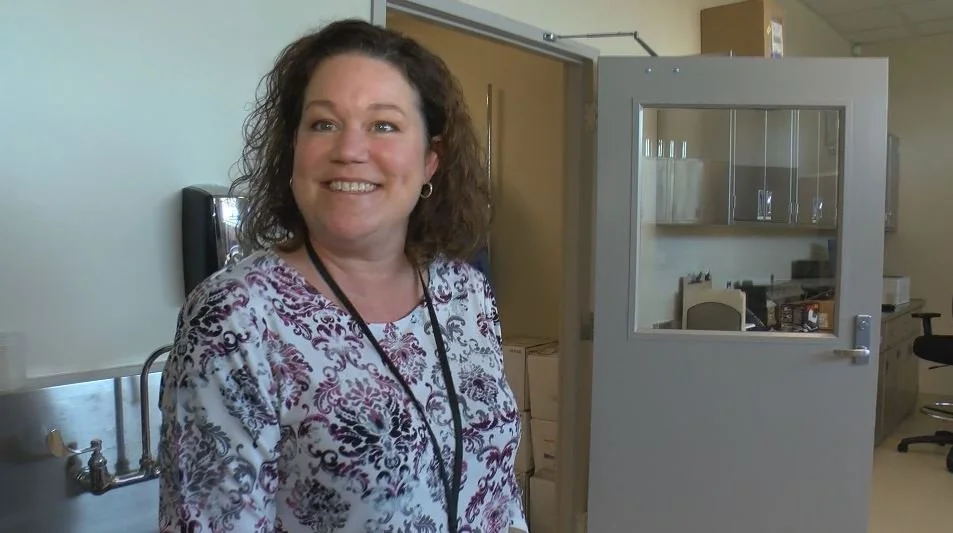
Public demands for an independent investigation of Mississippi Chief Medical Examiner Dr. Staci Turner currently center on four deaths, although the available evidence does not establish that she personally “botched” every case. The clearest documented contradiction involves Damien Cameron, whose cause and manner of death Turner classified as undetermined after his fatal encounter with Rankin County deputies; three independent forensic pathologists later reviewed the records and concluded that Cameron died by homicide from asphyxia caused by neck compression, with one stating that Turner’s office should have obtained the missing investigative information before closing the case as undetermined. (Mississippi Today) Turner’s office ruled Demartravion “Trey” Reed’s September 2025 hanging death a suicide, but his family sought an independent autopsy and continues to question that conclusion. As of July 31, 2026, no final independent-autopsy report has been publicly released; family members told the Mississippi Free Press that the second pathologist could not finalize his analysis without the belt used in the hanging and portions of Reed’s neck retained during the state examination. The same reporting also disclosed suicidal text messages attributed to Reed, meaning the public record raises legitimate transparency and evidence-access questions but does not yet establish that Turner’s suicide determination was wrong. (Mississippi Free Press) In Nolan Xavier Wells’ July 2026 death, Turner’s office conducted the first autopsy, but the official findings remain sealed pending presentation to a grand jury. An independent pathologist classified both cause and manner as undetermined and could not fully examine Wells’ airway or neck because the state retained his trachea, hyoid bone, and other neck structures and had already dissected his organs; although the pathologist described retention and dissection as common or standard forensic practices, those actions materially limited the family’s second examination, and he could not rule out nonaccidental factors. (Independent-autopsy findings; status of the state autopsy) Finally, the family of 13-year-old Channon Wilson alleges that his 2022 drowning was prematurely treated as accidental and that his body was embalmed without consent before a meaningful autopsy could preserve potential evidence; however, published reporting has found no publicly confirmed documentation connecting Turner or her office directly to Wilson’s case. (Atlanta Black Star) Together, these cases do not prove intentional wrongdoing, but they provide a substantial basis for an independent audit of Turner’s disputed findings, the office’s evidence-retention practices, and whether Black families in Mississippi are receiving complete, impartial, and transparent death investigations.

How to Get active:


Public pressure should demand an independent investigation—not harassment or a predetermined verdict. The immediate goals are an outside review of the disputed death investigations, a professional-conduct investigation, an audit of Mississippi’s death-investigation system, preservation of all evidence, and reforms giving families greater access to records and independent forensic review.

Take Action Now

* **Sign and share the existing petition:** The [petition concerning Dr. Staci Turner](https://www.change.org/p/petition-to-revoke-stacey-turner-s-medical-license) calls for an independent panel of out-of-state forensic pathologists, an audit of disputed death classifications, examination of possible racial disparities, public release of the findings, and licensing consequences if misconduct is established.

* **Request a formal licensing investigation:** The [Mississippi State Board of Medical Licensure](https://www.msbml.ms.gov/Complaints) regulates physicians and can impose discipline ranging from a reprimand to suspension or revocation. People with firsthand knowledge, records, expert findings, or other specific evidence may use its [official complaint system](https://complaints.msbml.ms.gov/). Submit facts and supporting documents—not copied allegations or speculation.

* **Demand a legislative performance audit:** Mississippi’s [PEER Committee](https://www.peer.ms.gov/contact-us/request-peer-services) accepts signed written complaints from citizens and can evaluate state-agency performance. Ask PEER to audit the State Medical Examiner’s Office’s disputed classifications, quality-control procedures, evidence-retention practices, racial disparities, family access to records, and compliance with accepted forensic standards. Because PEER prioritizes legislative requests, Mississippi residents should also ask their [state legislators](https://www.legislature.ms.gov/legislators/) to request the audit formally.

* **Report evidence of public corruption or abuse of authority:** People possessing specific evidence of intentional misconduct, falsification, concealment, abuse of power, or another possible violation of Mississippi law may contact the Attorney General’s [Public Integrity Division](https://www.ago.state.ms.us/divisions/public-integrity/). This channel should not be used merely to express disagreement with an autopsy conclusion.

* **Request public records:** Ask the [Mississippi Department of Public Safety](https://www.dps.ms.gov/forensic-laboratories/medical-examiner) for releasable policies, evidence-retention rules, quality-assurance procedures, annual caseloads, amended death classifications, contracts, staffing information, audit findings, and accreditation records. Families and legal next of kin may also request preliminary and final autopsy reports under the office’s [report-request procedures](https://www.dps.ms.gov/forensic-laboratories/medical-examiner/reports).

* **Support affected families:** Share family-approved statements, attend peaceful public events, support verified legal or independent-autopsy funds, and submit documented concerns to the [Mississippi NAACP](https://naacpms.org/file-a-complaint/). Do not speak for a family or disclose its private information without permission.

Demand Structural Reform

Ask Mississippi officials to enact:

* Independent, out-of-state forensic review of the disputed cases.
* Written evidence-retention and evidence-release rules.
* Advance family notice when organs or anatomical structures will be retained.
* A meaningful opportunity for a family-selected pathologist to observe or document the state autopsy.
* Independent review before certain suspicious deaths are classified as suicide, accident, or undetermined.
* Public reporting of amended findings, backlogs, complaints, and quality-control results.
* Regular external audits and a funded plan to obtain and maintain national medical-examiner accreditation.
* Protection for families, witnesses, medical personnel, and whistleblowers who report legitimate concerns.

Mississippi’s 2026 **HB 1427** proposed several related protections—including independent prosecutors, family-selected pathologists, evidence preservation, statewide reporting, and greater family access—but [died in committee](https://www.billtrack50.com/billdetail/1944288). Ask lawmakers to reintroduce its strongest forensic-transparency and family-protection provisions during the next legislative session.

A direct message to officials can say:

**“I am asking for an independent, out-of-state review of the disputed death investigations involving Damien Cameron, Trey Reed, Nolan Wells, and any other case supported by credible evidence; a PEER audit of the State Medical Examiner’s Office; preservation of all relevant evidence; and public forensic reforms that protect every Mississippi family. If an impartial investigation establishes professional misconduct, I expect appropriate disciplinary action.”**

WHat not to do:

Do not threaten, stalk, harass, dox, review-bomb, trespass against, or intimidate Dr. Turner, medical-examiner employees, witnesses, officials, or their families. Do not flood professional complaint systems with identical submissions from people who possess no case-specific evidence. Petitions and constituent letters are the appropriate channels for general public pressure.